
 All work
Case study · Overwatch via NTERSOL · 2025 — now
Which insured homes is this fire about to reach, and how much is at stake?
The stakes
A wrong number is worse than no number.
A confident but wrong exposure figure can drive a bad call on policyholders, claims or a binding moratorium. Most of the hard bugs here looked like small UI glitches.
The mobile app
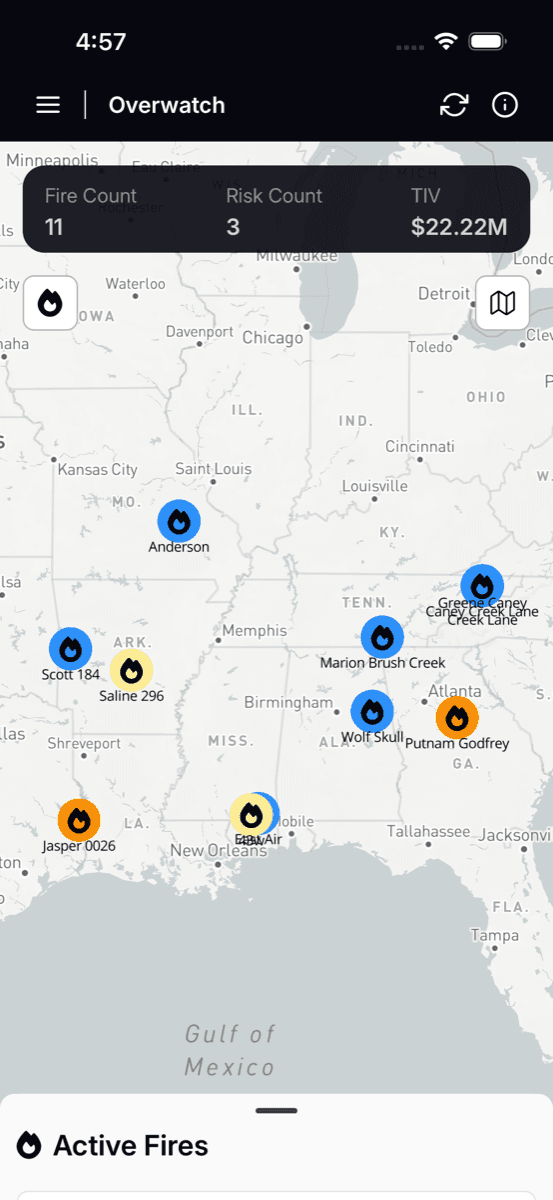
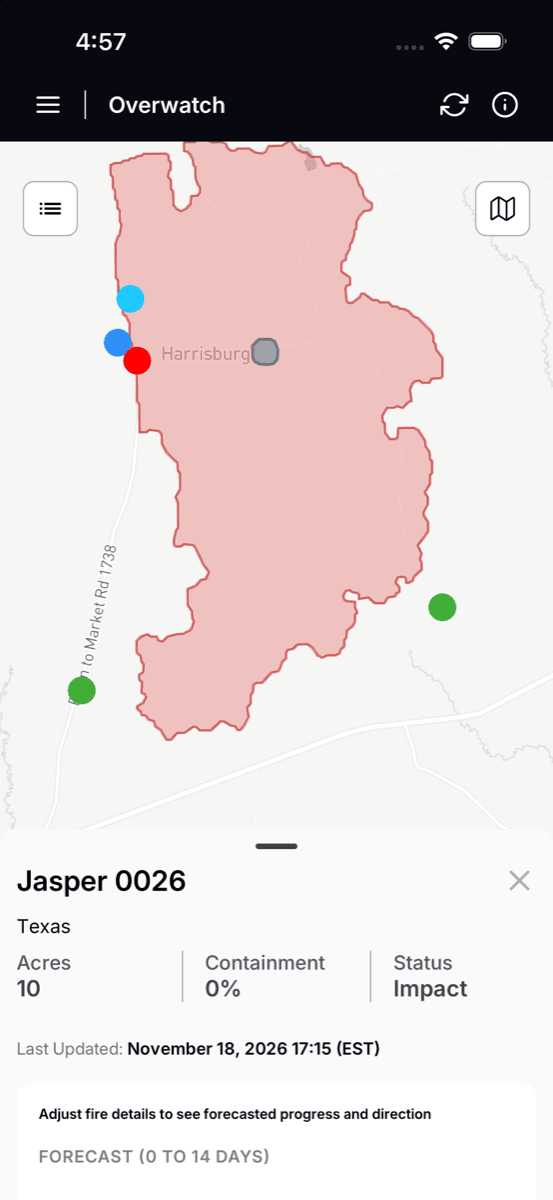
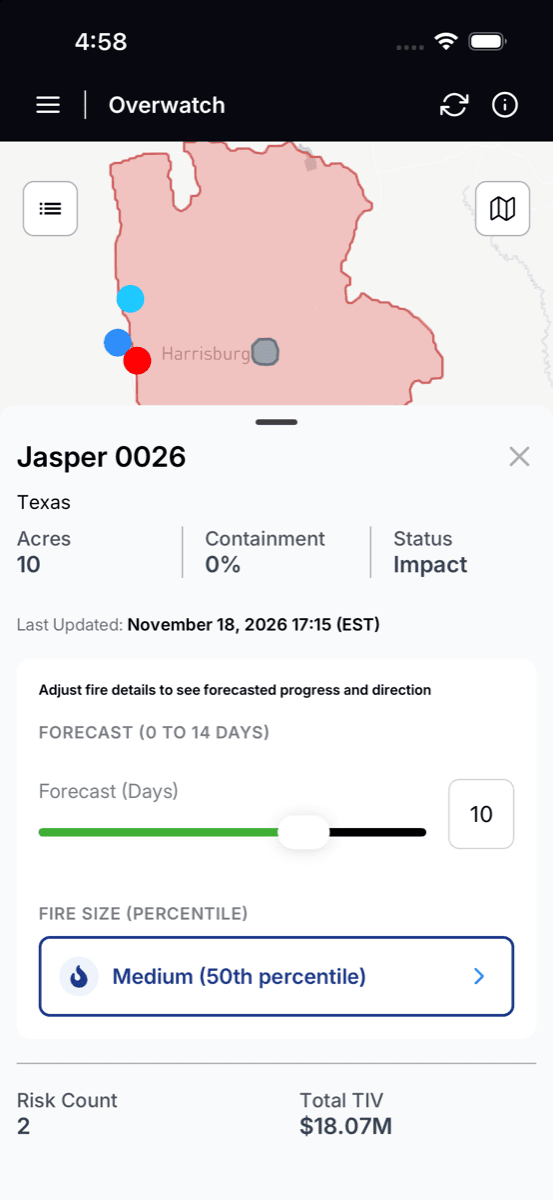
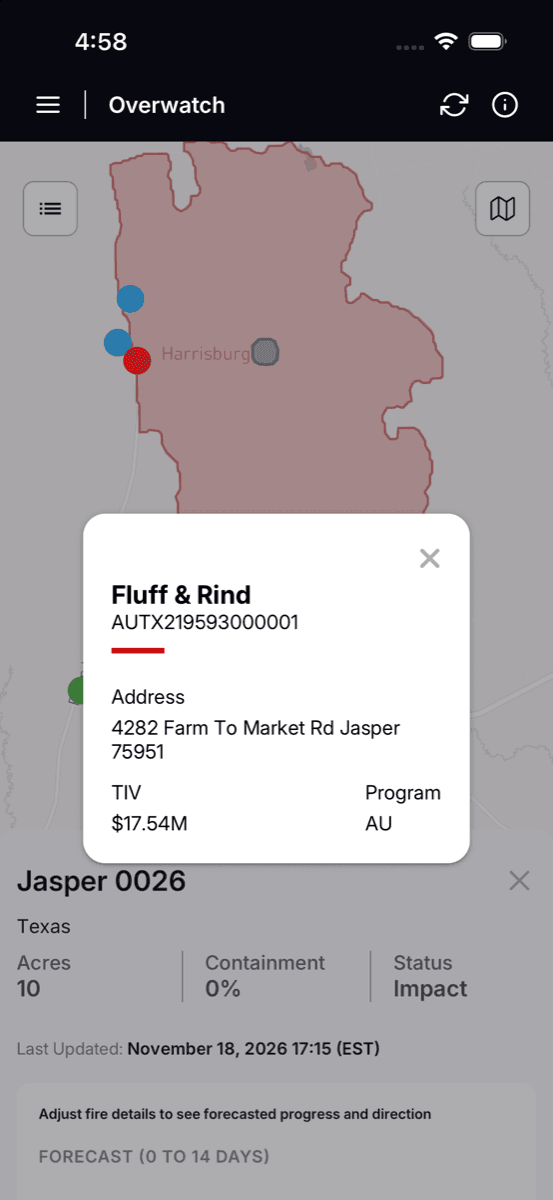
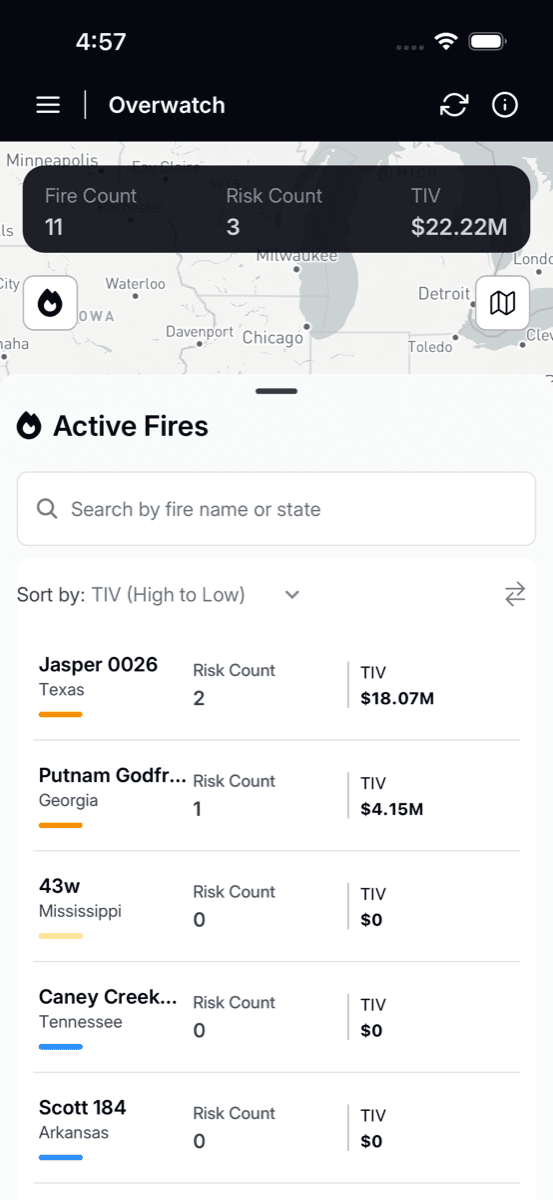
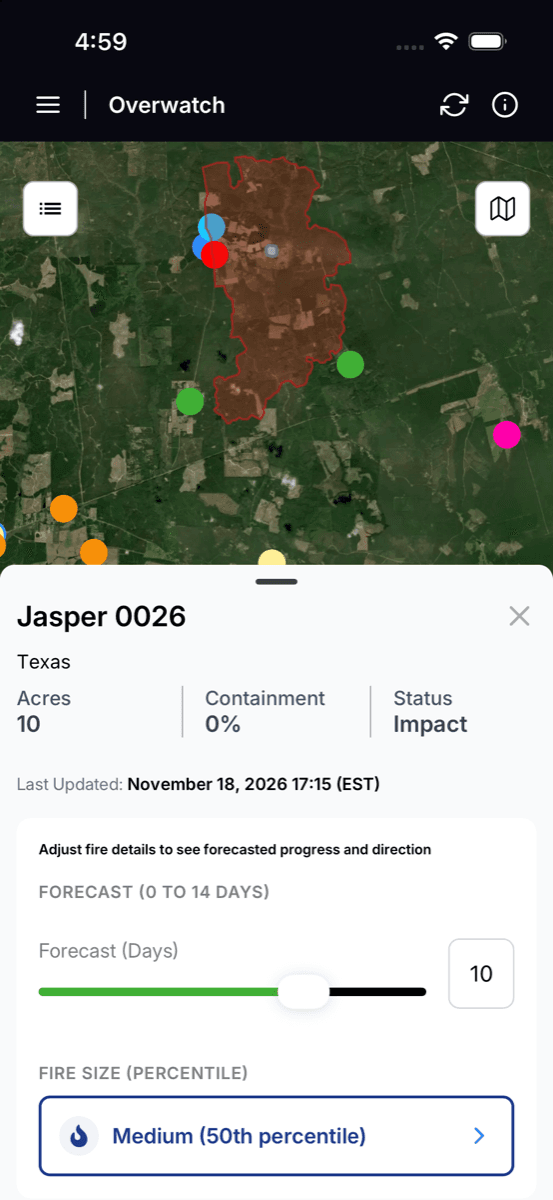
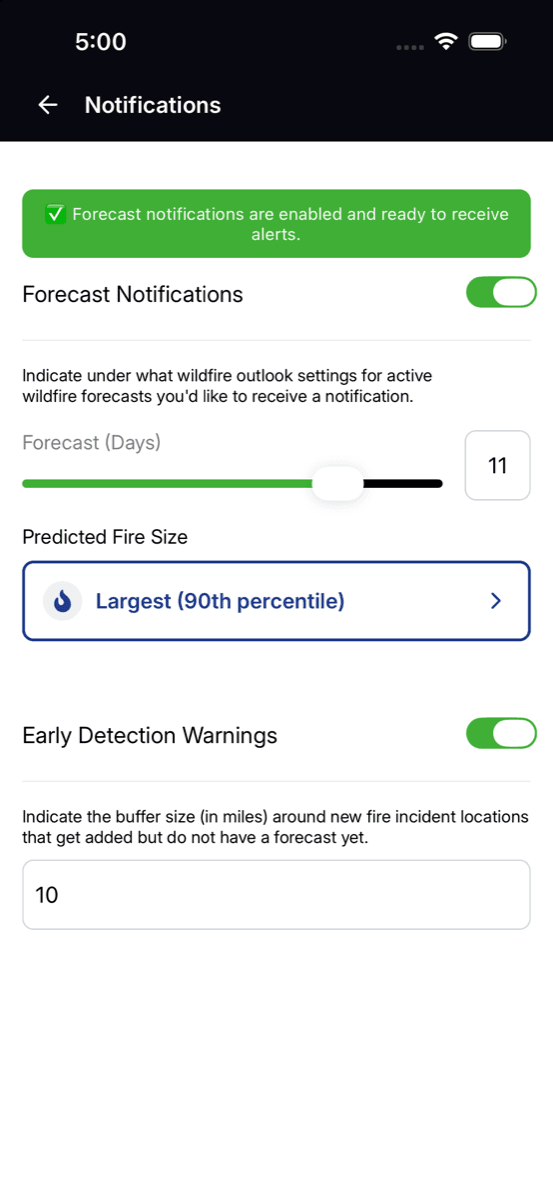
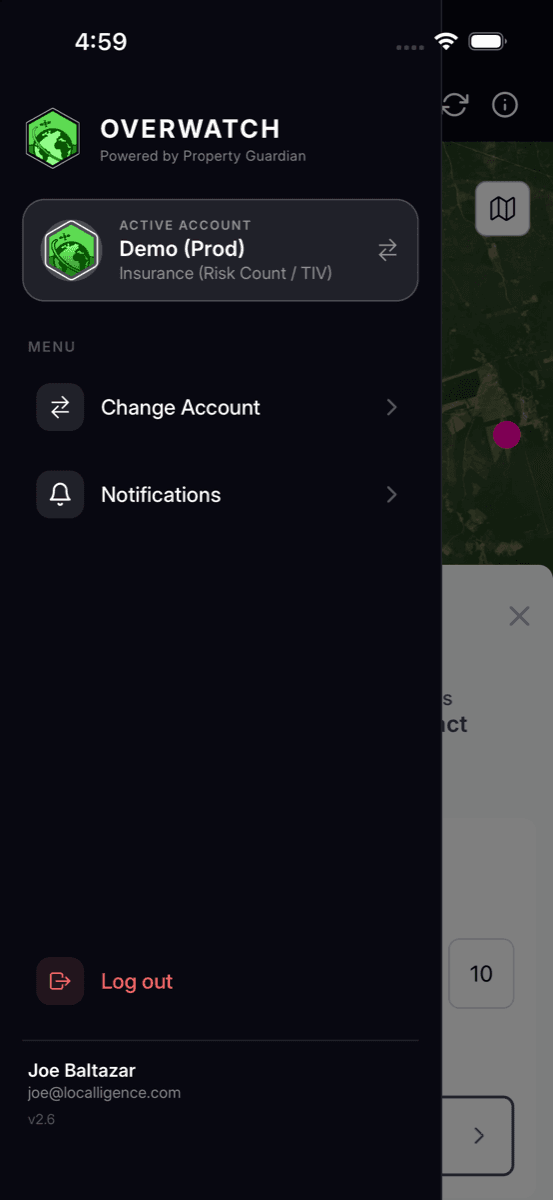
Every active fire next to the account’s own properties, with properties at risk and Total Insured Value over a 0–14 day spread forecast. Push alerts bring field users in when a fire threatens their portfolio.
The web platform
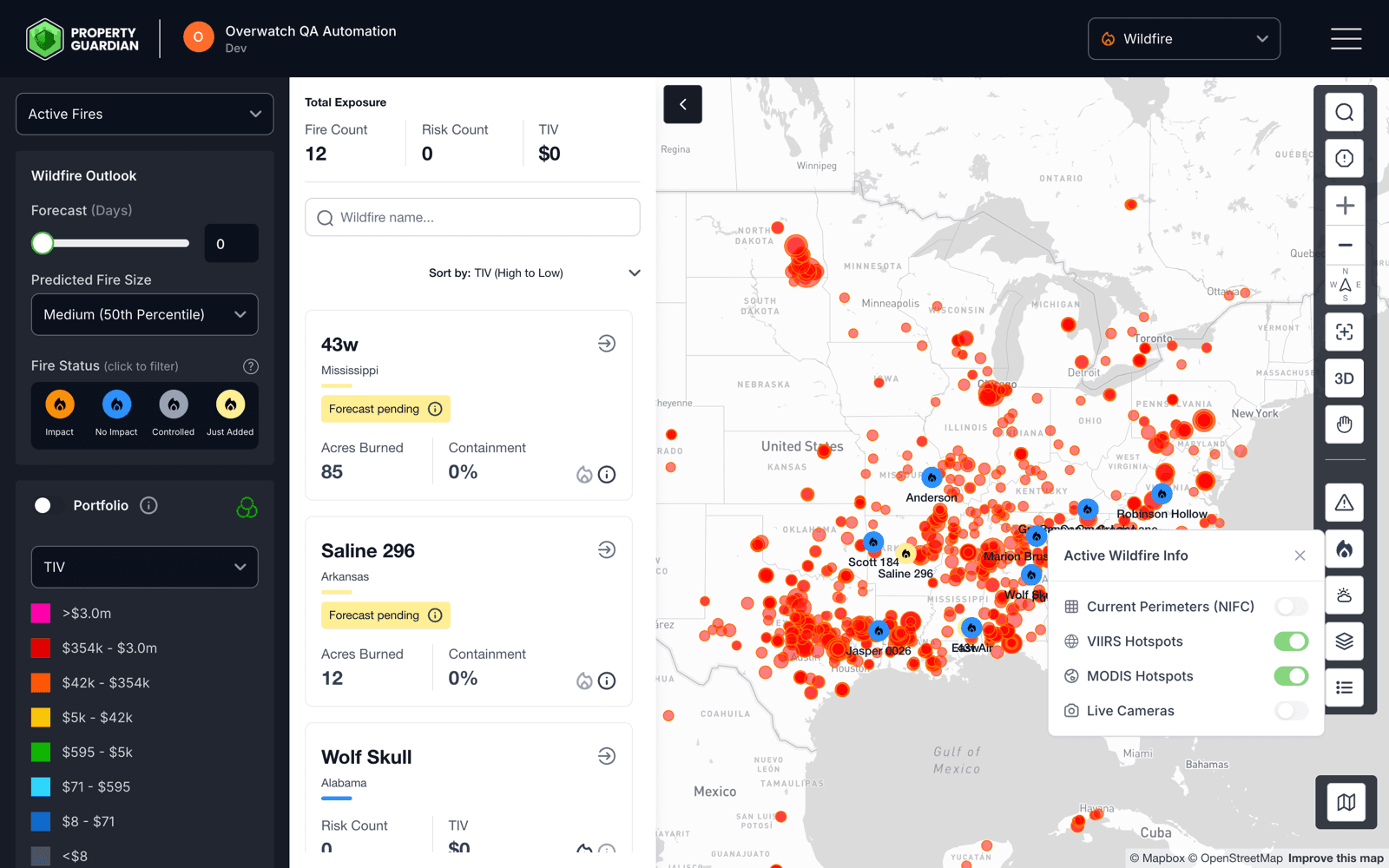
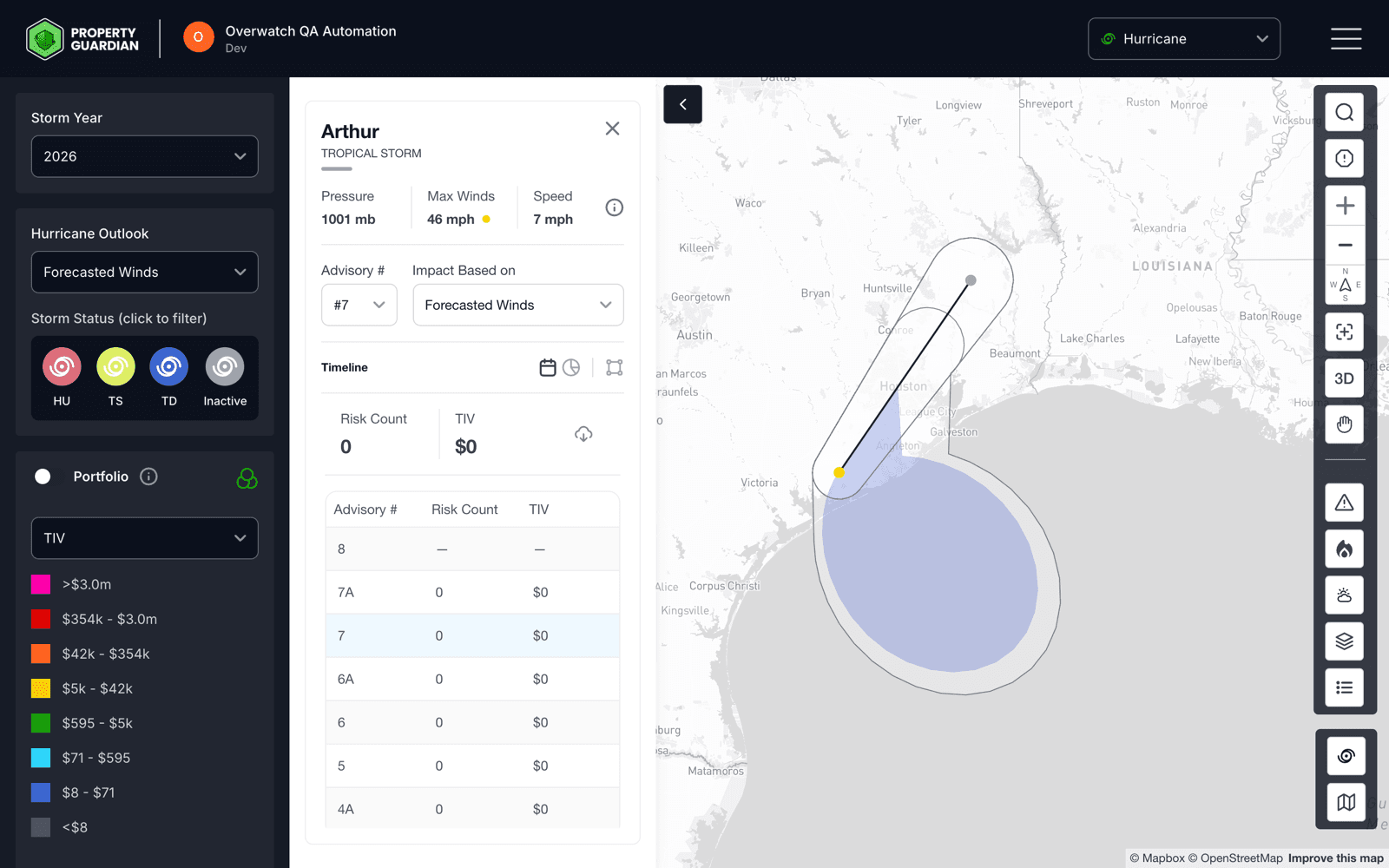
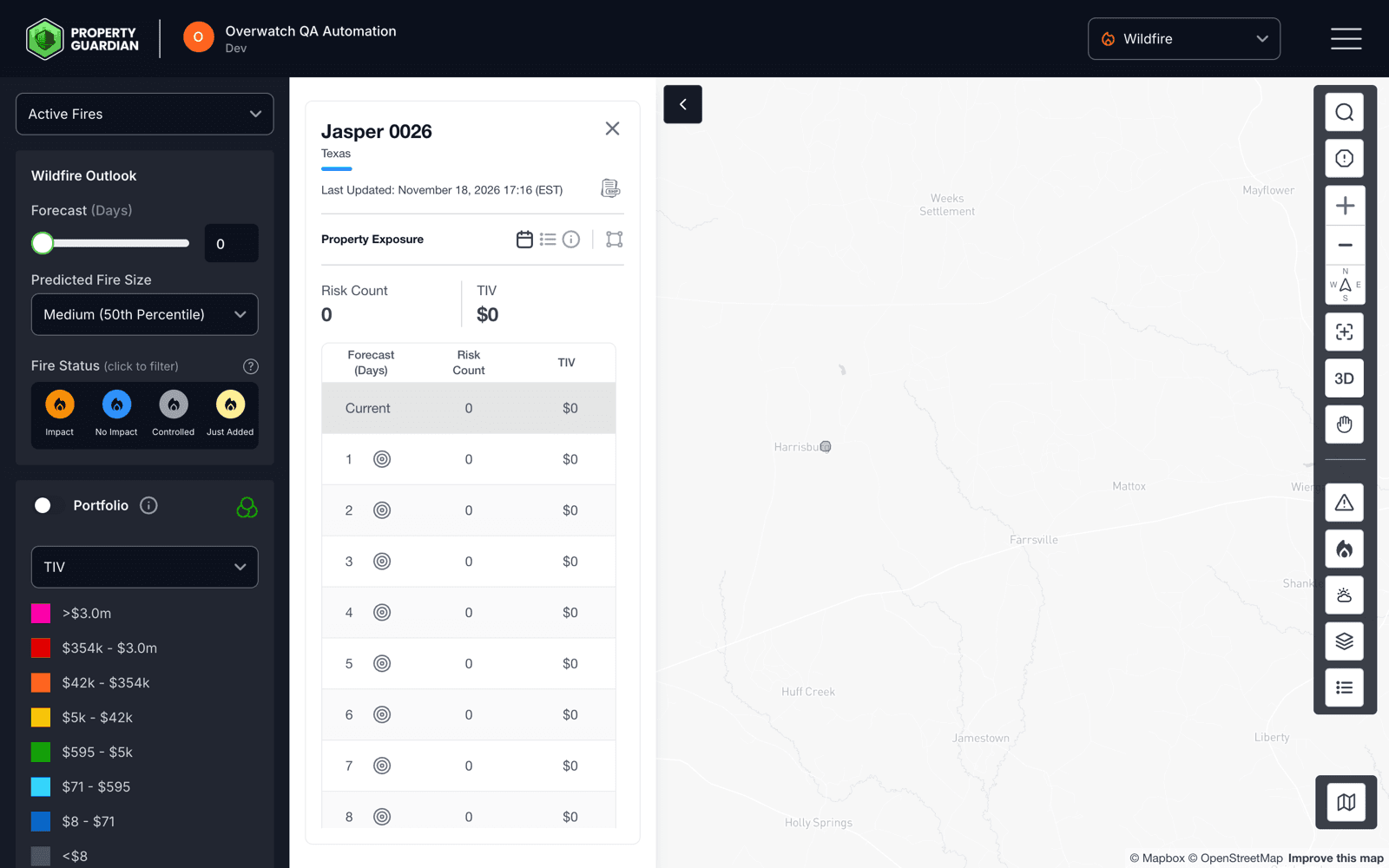
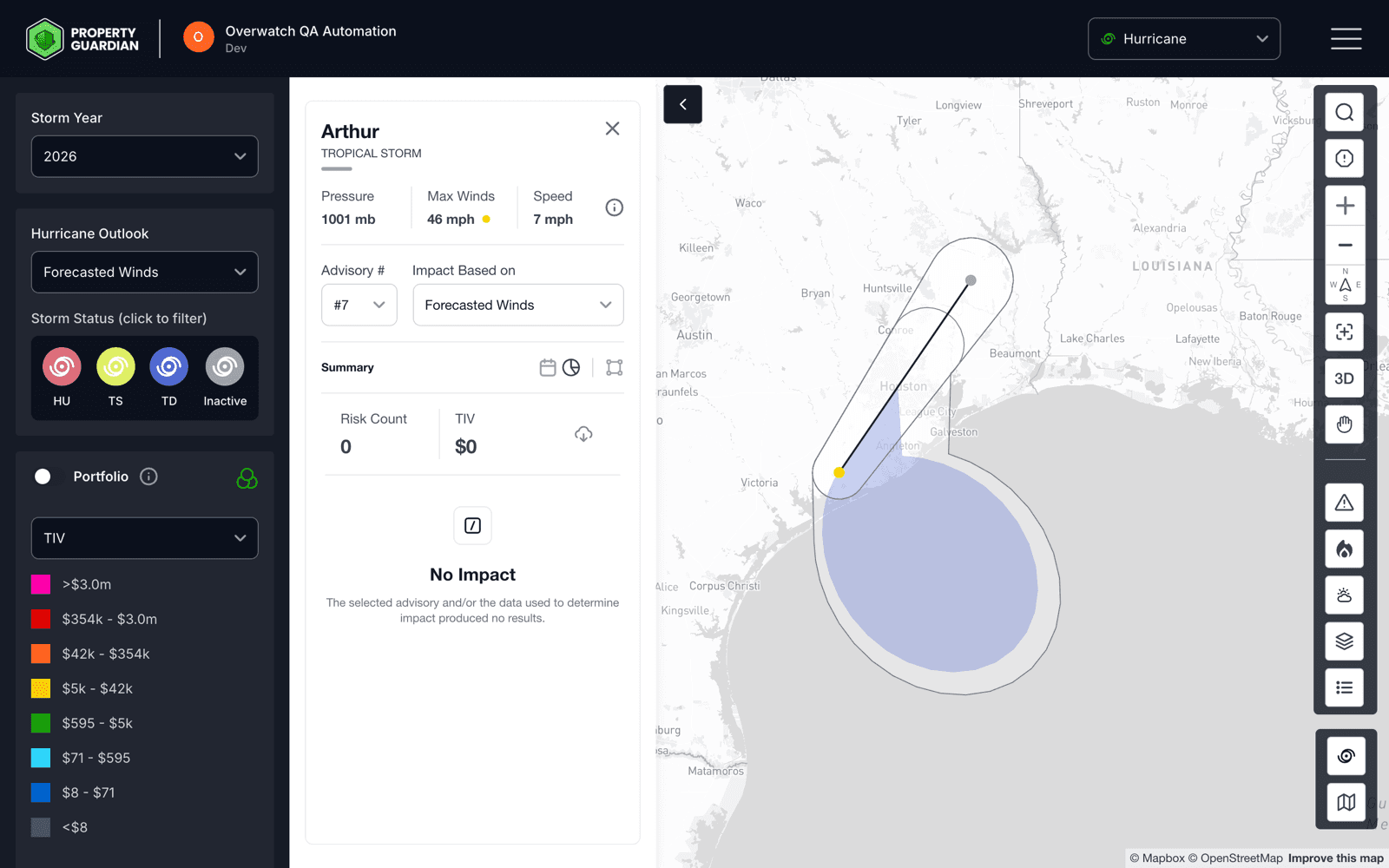
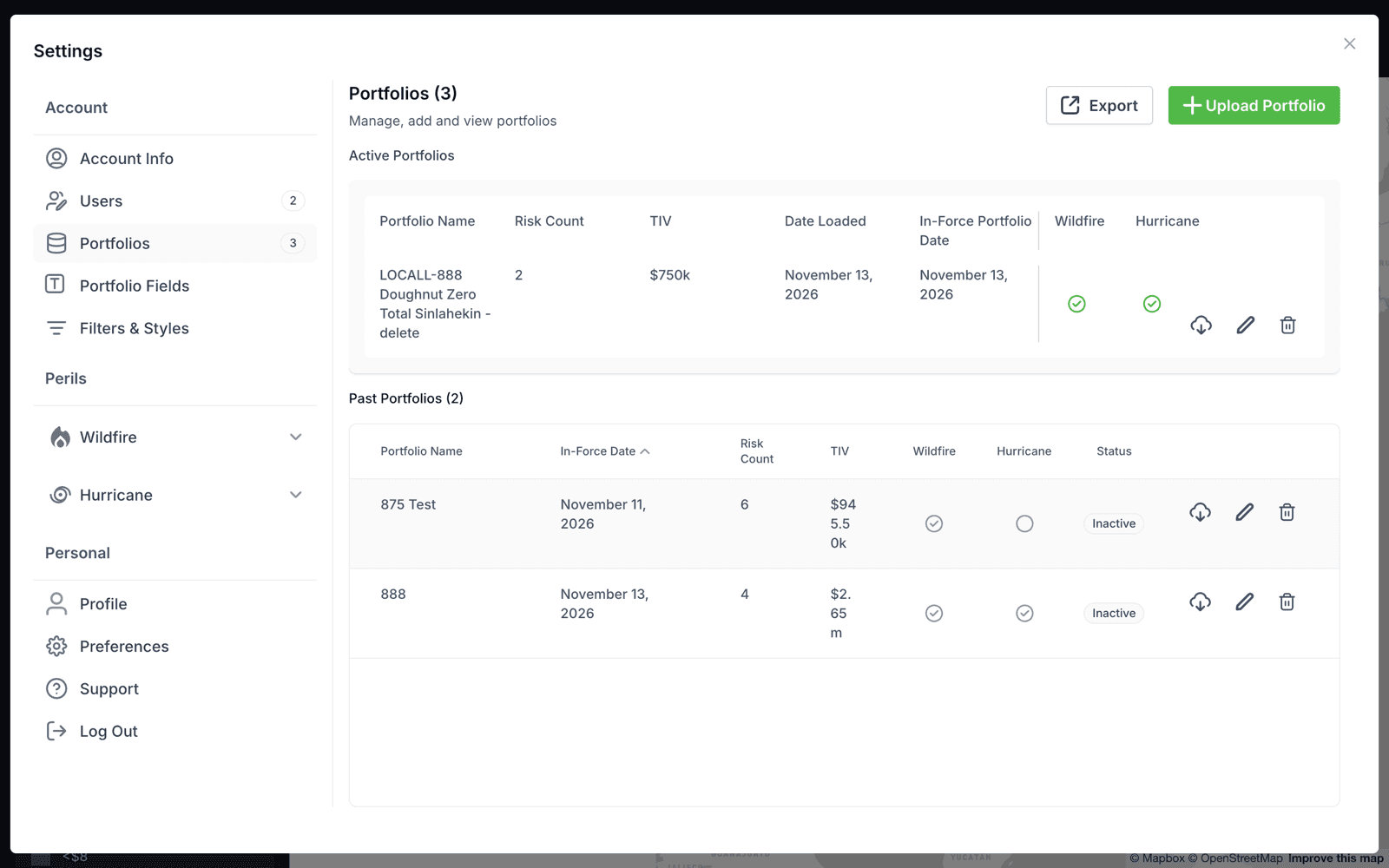
The desk tool for wildfire and hurricane: satellite hotspots, forecast cones, advisory timelines, selection tools and portfolio uploads. I joined a team of six-plus to make its numbers trustworthy.
- 226 / 232Mobile commits, lead from the first one
- 26Web fixes in five weeks, each to its root cause
- iOS 2.6Shipped to both stores, now on Android API 36
01 — Hurricane exposure
The table saw a fifth of the portfolio.
For one advisory, the Timeline said 586 properties and $460.83M. The panel right above it said 774 and $783.84M.
20% → 100%
The search endpoint returned at most 1,000 rows when topN was left out, and never said it truncated. With 5,035 locations, the app was scoring a sample.
Problem
Both hurricane hooks left out topN, so each scored an arbitrary 1,000-row sample. A silent cap produced numbers that looked right and weren’t.
Decision
Read every location for the area, then make that read fast: concurrent pages with retries, a wave size that starts at one page and doubles, and a loading state that covers the whole pipeline.
Why it matters
The big advisory read went from 9 sequential round trips (about 84 s) to 4, and one-page searches stopped paying for five requests. A table still filling in no longer looks empty.
- Storm selected
- Union of forecast cones
- 43,817 rowsevery location
- Adaptive waves1 → 2 → 4 pages · retries
- Panel and table agree
- Stale responses dropped
- Loading until complete

02 — Field sessions
Reopening the app stopped crashing it.
Field users open the app hours apart on poor connections. The Auth0 token lasted about an hour and was never renewed.
3
Production crash classes fixed at the root: expired-token resume, a native Keychain crash after a backend migration, and a release-only launch crash.
Problem
Reopening after an hour sent a burst of requests that all got 401. Each one logged out and purged state mid-navigation, and the app crashed.
Decision
One deduplicated token refresh on cold start and every foreground, and one refresh-and-retry on 401 before logging out. Navigation needs a valid token, not just a stored user.
Upgrade path
A backend migration left Keychain credentials for the old Auth0 domain, which crashed login natively. A one-time wipe before Auth0 mounts fixed every existing install.
03 — Believable but wrong
Numbers that agree, on every screen.
In risk software, a plausible wrong answer is the worst failure. Most of these hid in defaults nobody had checked.
2
Race conditions
A previous storm’s response could land on the new storm for 500 ms, and slow reverse geocodes overwrote newer pins. Responses are now tied to their scope and request id.
3
Lookup errors
ZIP searches flagged fires tens of miles away, a German postcode matched Oregon, and placeholder land codes showed as ZIPs. Each now uses the right endpoint or label.
FIRMS
Hotspots restored
The upstream GeoServer stopped publishing satellite layers and the spinner never stopped. A server route now reads NASA FIRMS’ public 48-hour feeds and shows a toast on failure.
See the pattern in code (GitHub, opens in a new tab)A live demo with fake data: risk that follows the forecast slider, markers that never hide a policy, and a toggle that shows the original bug.
04 — Guardrails
Tests that prove the bug is caught.
Every fix ships with a commit message that records the symptom, root cause, evidence and why the fix is shaped that way.
KPI tests
New tests assert that the count equals the number of cards shown, not just that a number appears. I broke the KPI on purpose to confirm they fail.
Fewer moving parts
The public smoke run logged in three roles before one unauthenticated test. Setup now logs in only the roles the selected Playwright projects need.
Same numbers
Mobile asks the API for precomputed fire risk, so risk count and TIV match the web. Policies stacked at one address group into one marker coloured by the highest TIV.
Screens
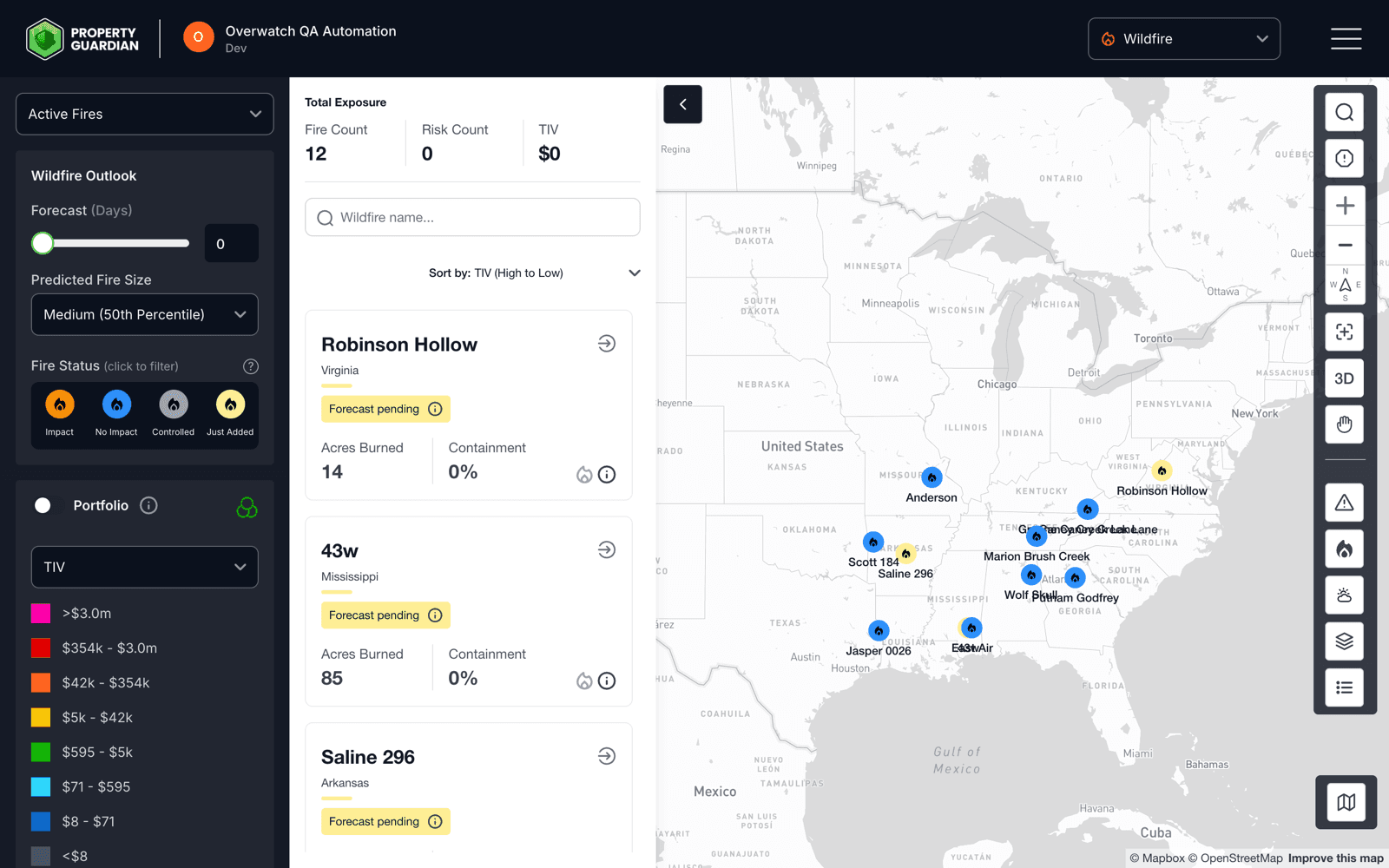
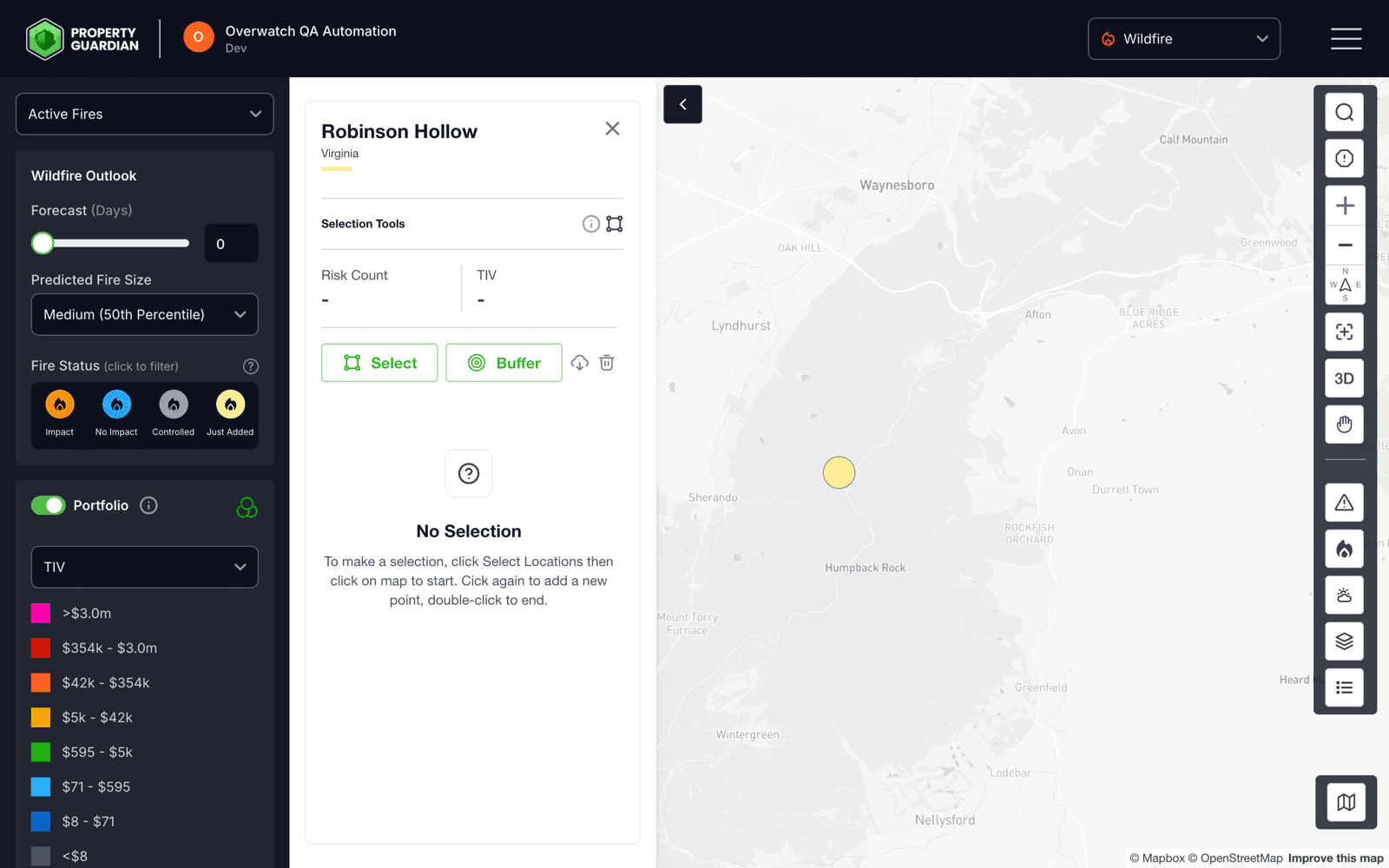
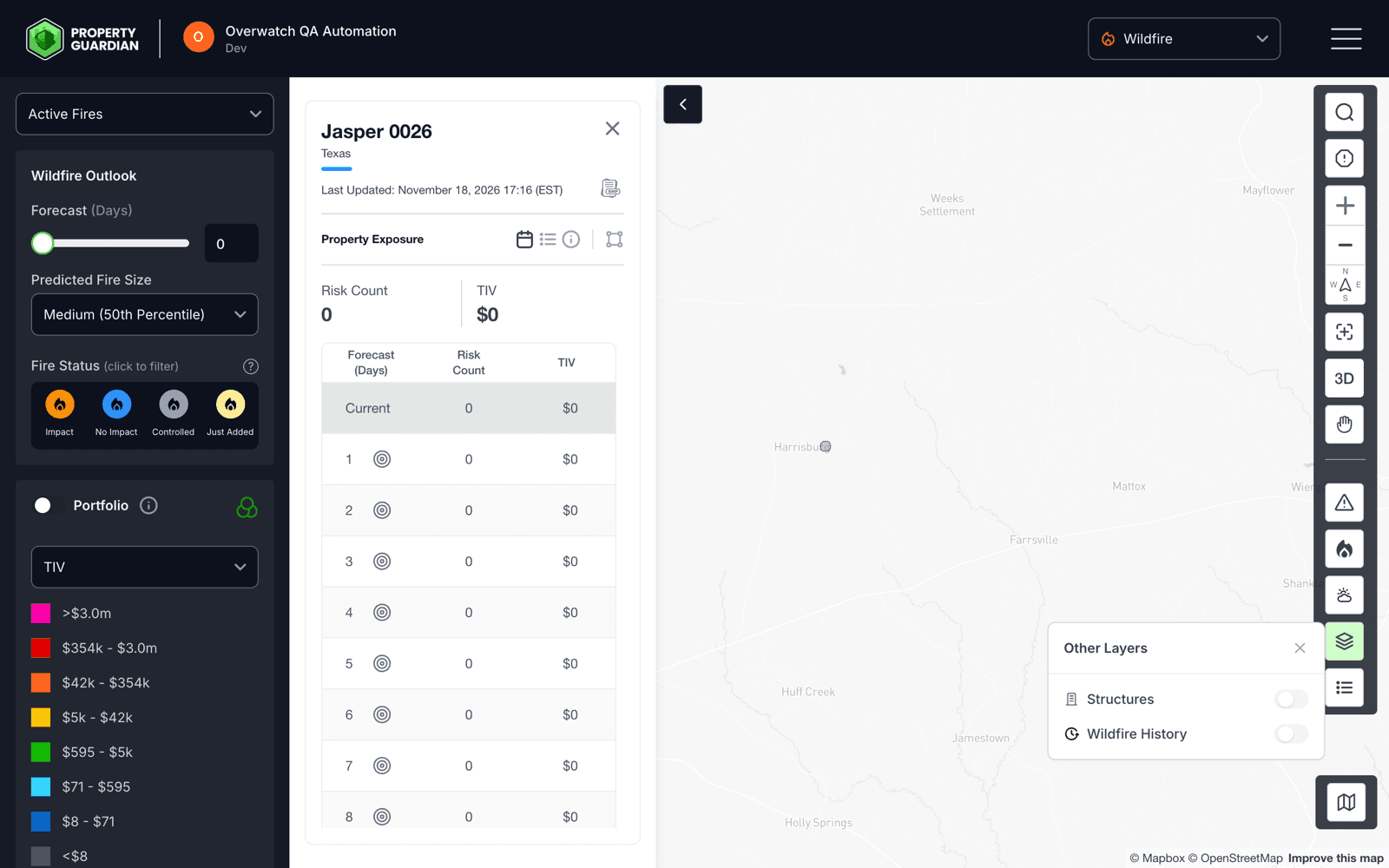
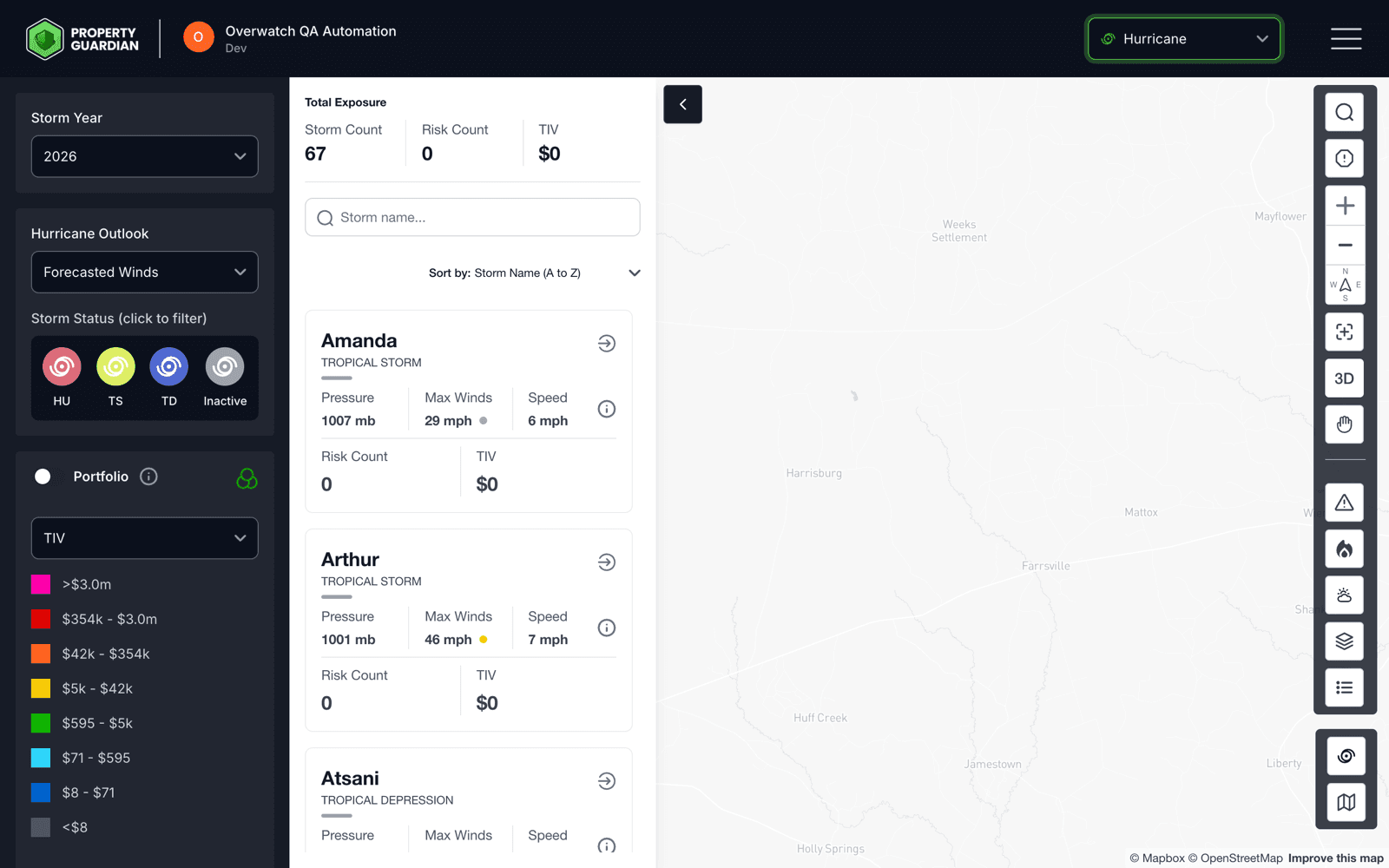
One answer, at the desk and in the field.
Web: dev environment with a QA account. Mobile: demo account. No client data.
What I learned
Plausible but wrong is the worst failure.
Silent failures hide in defaults
A missing topN, networkMode ‘online’, an image optimizer, a hard-coded host. I now check the defaults of every API and library on a data path.
Design for upgrades, not fresh installs
The worst mobile bugs hit existing users after a backend migration, from state saved in two places. Migrations now cover both before auth changes.
Loading state is part of correctness
A spinner that clears too early makes “still loading” look like “no exposure”. In this domain, that is a wrong answer.
What I’d push for next
API contracts that report truncation, a CI check for hard-coded hosts, and crash reporting plus unit tests on auth and marker grouping from day one.
